Gravity diverter valves play an essential role in bulk material handling systems, providing a simple yet effective means of redirecting the flow of granular, powdered, and particulate materials between multiple discharge points. By leveraging gravitational force to actuate the diverter mechanism, these valves achieve reliable operation without the complexity of powered actuators, making them ideally suited for applications where simplicity, reliability, and rapid cycling are paramount. In industries ranging from power generation and cement manufacturing to mining and food processing, gravity diverter valves enable efficient material routing with minimal maintenance burden. Bairun Electric Power Machinery engineers and manufactures gravity diverter valves designed for demanding industrial material handling applications.
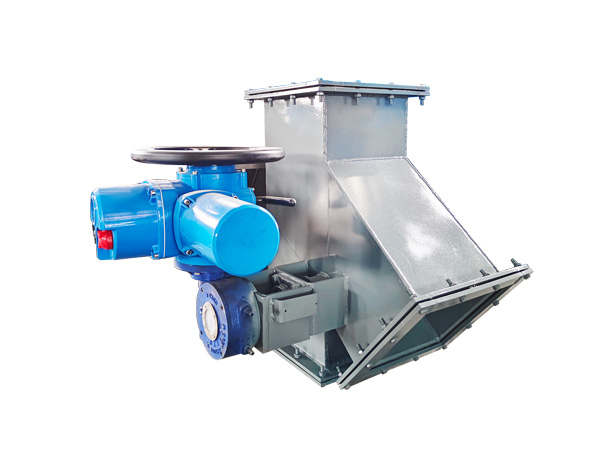
Principles of Gravity Actuation in Diverter Valves
The gravity actuation mechanism distinguishes gravity diverter valves from pneumatically or electrically operated diverters. In a gravity diverter valve, the diverter blade or gate is weighted or spring-loaded to seek a default position, typically the primary discharge path. When material flow or an external signal demands redirection, a momentary force tips the gate to the alternate position, where gravity locks it in place until the next cycle. This self-locking behavior eliminates the need for continuous power to maintain position, making gravity diverter valves highly reliable in remote or unmanned installations.
This passive actuation approach eliminates actuator motors, control circuits, and power supplies from the valve assembly, significantly reducing both initial cost and ongoing maintenance requirements. The absence of powered components also eliminates electrical installation in hazardous areas where flammable dusts or gases may be present. A mechanical detent or latch confirms the selected position with positive feedback that operators can verify visually before allowing material flow to resume.
Valve Body Design for Material Flow
The diverter valve body must manage the full cross-section of the material stream without creating dead zones where material can accumulate and eventually cause blockage. Smooth interior surfaces with generous radii at the inlet and outlet junctions prevent hang-ups and promote clean material flow through both positions. Internal guides and wear-resistant linings protect the valve body from abrasive material streams and extend service intervals between maintenance shutdowns.
The diverter gate itself must present a clean leading edge that slices through the material stream without deflection or binding. Gate pivot geometry is carefully designed to ensure the blade seats positively in each position without residual movement that could cause material leakage. Positive mechanical detents or locking mechanisms confirm gate position visually and prevent unintended repositioning from vibration or material impact forces during operation.
Material Selection for Industrial Environments
Material handling applications impose specific demands on diverter valve construction based on the characteristics of the bulk solids being handled. Abrasive materials such as coal, limestone, cement clinker, and mineral ores require wear-resistant internal surfaces, typically achieved through hard-facing, ceramic tile lining, or replaceable wear plates at high-wear locations. Without adequate wear protection, valve bodies and gates in abrasive service may require replacement after relatively few operating cycles.
Corrosive materials including certain chemical powders, fertilizer products, and food-grade materials demand stainless steel or specialty alloy construction with appropriate surface finishes. The valve manufacturer must understand both the mechanical and chemical characteristics of the material to recommend appropriate construction materials and sealing components. For food-grade applications, surfaces must be finished to a smoothness that prevents material accumulation and enables thorough cleaning during product changeovers.
Integration with Material Handling Systems
Gravity diverter valves integrate with conveyor transfer points, bins, hoppers, and process equipment to create complete material routing systems. The valve position must align with the discharge of upstream equipment and the inlet geometry of downstream vessels, requiring dimensional coordination during system design. Common installations include diverting coal between boiler feed hoppers, routing cement between storage silos, and splitting mineral concentrates between processing streams.
Interlocking with upstream equipment prevents material flow while the valve repositions, avoiding spillage and backfeeding. Position indication switches provide feedback to the control system, confirming that the valve has reached its commanded position before upstream equipment resumes operation. In critical applications, multiple position sensors provide redundancy against sensor failure that could allow upstream equipment to restart prematurely.
Maintenance and Inspection Considerations
Regular inspection of pivot points, locking mechanisms, and wear surfaces maintains reliable diverter valve operation. Pivot pins and bushings should be checked for wear that could introduce play in the gate movement. Gate sealing surfaces require inspection for impact damage, wear penetration, and corrosion. Scheduled maintenance should be aligned with plant shutdowns or process changeovers to minimize production impact.
Selecting a Gravity Diverter Valve Supplier
Qualified gravity diverter valve manufacturers provide application engineering support to ensure proper sizing and configuration for specific material characteristics and routing requirements. Custom fabrication capabilities accommodate non-standard sizes and unusual material routing geometries. The ability to provide complete diversion station assemblies, including structural supports, dust collection connections, and position monitoring equipment, reduces interface complexity for the end user.
Bairun engineers and manufactures gravity diverter valves for demanding industrial material handling applications. Our experienced team provides application support, custom configuration options, and field service to ensure reliable valve performance throughout the installation service life. Discuss your material handling requirements with our engineering specialists.
References:
References:
American Society of Mechanical Engineers. ASME B31.3, Process Piping.
Society of Mining, Metallurgy and Exploration. SME Mineral Processing Handbook.
International Society of Automation. ISA-RP75.23, Considerations for Evaluating Control Valve Packing.
CEMA (Conveyor Equipment Manufacturers Association). Belt Book: Recommended Practice for Troughed Belt Conveyors.