Flue gas dampers constitute a vital category of flow control equipment in thermal power generation, managing the movement of combustion byproducts through boiler flue gas paths, air pollution control systems, and stack discharge points. These dampers operate in some of the most challenging environments in any industrial facility, handling corrosive, high-temperature, and abrasive gas streams under continuous duty conditions. The performance and reliability of flue gas dampers directly influence boiler thermal efficiency, emissions compliance, and overall plant availability. Bairun Electric Power Machinery has established itself as a capable manufacturer of flue gas dampers serving power generation facilities across a wide range of configurations and fuel types.
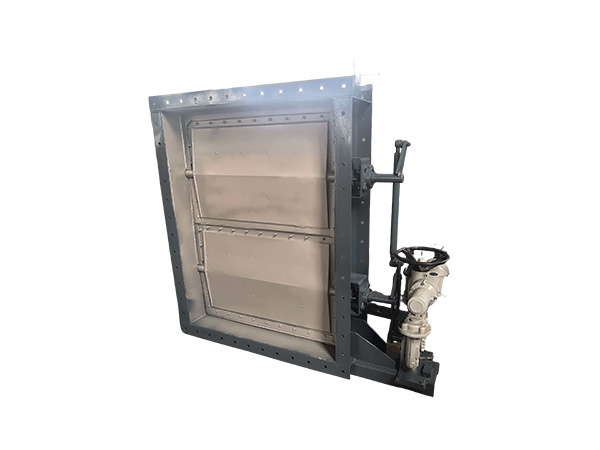
Types of Flue Gas Dampers in Power Plant Service
Power plant flue gas systems incorporate several distinct damper types, each serving specific functions in the gas path. Primary air dampers control the flow of preheated air from the air preheater to the coal pulverizers, regulating the balance between primary air and fuel flow to each burner. These dampers operate at temperatures approaching 350 degrees Celsius in some designs and must maintain precise positioning to support proper fuel-air mixing throughout the boiler load range. The control accuracy of primary air dampers directly affects combustion stability, unburned carbon in fly ash, and nitrogen oxide formation rates.
Secondary air dampers manage combustion air admission through the windbox and overfire air ports, influencing flame stability and excess air levels that directly affect combustion efficiency and nitrogen oxide formation. Induced draft fans draw combustion gases through the boiler convection passes and force them through the flue gas cleaning systems toward the stack. Variable inlet guide vane dampers on the induced draft fan control the fan output and system resistance, providing the primary means of maintaining slight negative pressure in the furnace. Stack isolation dampers at the flue gas outlet provide a gastight seal during boiler startup, shutdown, and maintenance periods, preventing false air infiltration that would cool the gas stream and reduce electrostatic precipitator or baghouse collection efficiency.
Materials and Coatings for Flue Gas Environments
Flue gas temperatures in coal-fired power plants typically range from 300 to over 400 degrees Celsius at the economizer outlet, with acid dew point considerations dictating minimum gas temperatures throughout the gas path to prevent cold-end corrosion. Flue gas desulfurization systems introduce wet, sulfur-contaminated gas streams that require corrosion-resistant construction throughout the scrubber modules and downstream induced draft fan housings. The combination of moisture, sulfuric acid, and chloride compounds in wet flue gas desulfurization systems creates one of the most aggressive corrosion environments in any industrial facility.
Damper body and blade materials must be selected with attention to both maximum operating temperature and the chemical environment. Carbon steel construction is adequate for the high-dry sections of the gas path where temperatures prevent condensation, while marine-grade aluminum brass or stainless steel alloys resist the sulfuric acid corrosion that develops at lower temperatures. Polymeric or ceramic coatings extend component life in high-erosion zones where fly ash particles impact blade surfaces at high velocity.
Blade Design and Structural Considerations
Flue gas damper blades in large-diameter ducts may exceed two meters in width, imposing significant structural demands on blade design. Airfoil blade profiles minimize pressure drop and reduce operating torque compared to flat-plate designs, improving energy efficiency and reducing actuator sizing requirements. Multi-blade louvered configurations accommodate very large duct cross-sections while keeping individual blade sizes manageable for manufacturing and maintenance. The structural analysis of large blades must account for both the pressure differential across the blade and the vibration induced by turbulent gas flow.
The damper frame must resist the thermal expansion forces transmitted from the ductwork during heating and cooling cycles. Expansion joints adjacent to the damper isolate structural loads from the damper mechanism, allowing the frame to maintain dimensional stability and reliable blade closure regardless of duct temperature variations. Improper expansion accommodation is a leading cause of damper binding and premature seal failure in high-temperature applications, as differential expansion between the frame and the blade can impose large lateral loads on the blade bearings and stems.
Control and Actuation Requirements
Flue gas dampers serve both modulating control and isolation functions, each demanding different actuator characteristics. Modulating dampers require smooth, responsive positioning with accurate position feedback for integration with distributed control systems. Electric actuators with integral positioners or pneumatic actuators with digital positioners provide the precision necessary for combustion optimization control loops that may call for positioning accuracy within one percent.
Isolation dampers prioritize tight closure and reliable sealing over fine positioning accuracy, with spring-return pneumatic actuators providing fail-safe closure in the event of air supply failure. Stack isolation dampers require robust sealing performance to prevent false air infiltration that would dilute the flue gas stream and compromise continuous emission monitoring accuracy. Airtight isolation dampers may be specified with leakage rates below 0.05 percent of the rated flow at design pressure differential, requiring careful attention to seal design and actuator sizing.
Selecting a Flue Gas Damper Manufacturer
Power plant flue gas damper procurement should emphasize manufacturer experience with similar boiler configurations and fuel types, as operating experience informs design optimizations that benefit plant performance. Technical documentation should include pressure drop curves, operating torque requirements, and material certification for all pressure-retaining components. Field service capability for commissioning and outage support adds significant value, particularly for large dampers that may require on-site assembly and adjustment.
Bairun supplies engineered flue gas dampers for utility and industrial power generation applications, with configurations addressing combustion air, induced draft, FGD, and stack isolation functions. Our engineering team provides application engineering, damper sizing, and performance documentation for each project. Request a technical proposal for your power plant damper requirements.
References:
References:
American Society of Mechanical Engineers. ASME TDP-1, Controls and Protection of Steam Generators.
Combustion Engineering Association. Combustion Fossil Power Systems Design and Operation Guide.
Electric Power Research Institute. EPRI Air Quality Control System Handbook.
U.S. Environmental Protection Agency. Clean Air Act Standards for Electric Utility Generating Units.